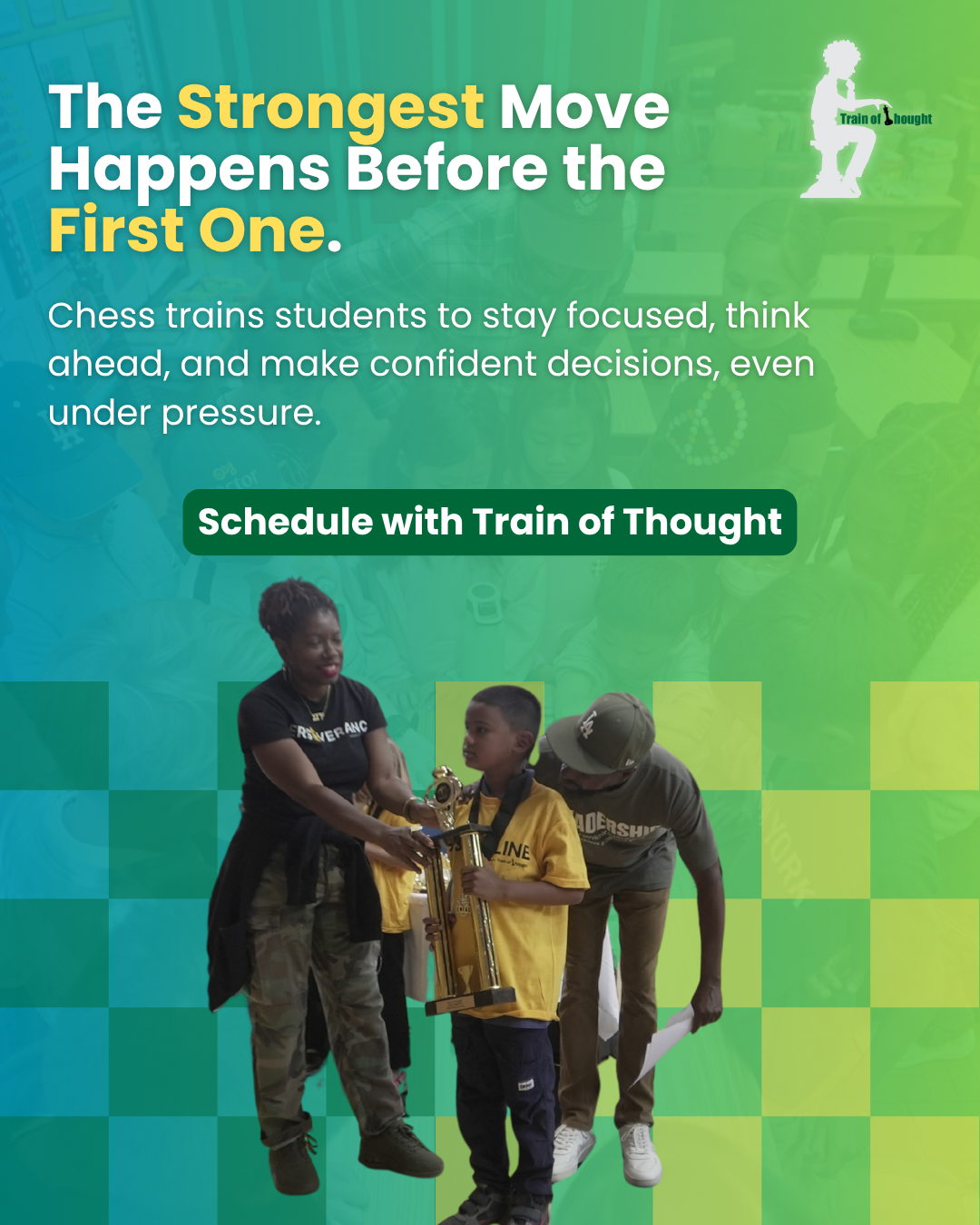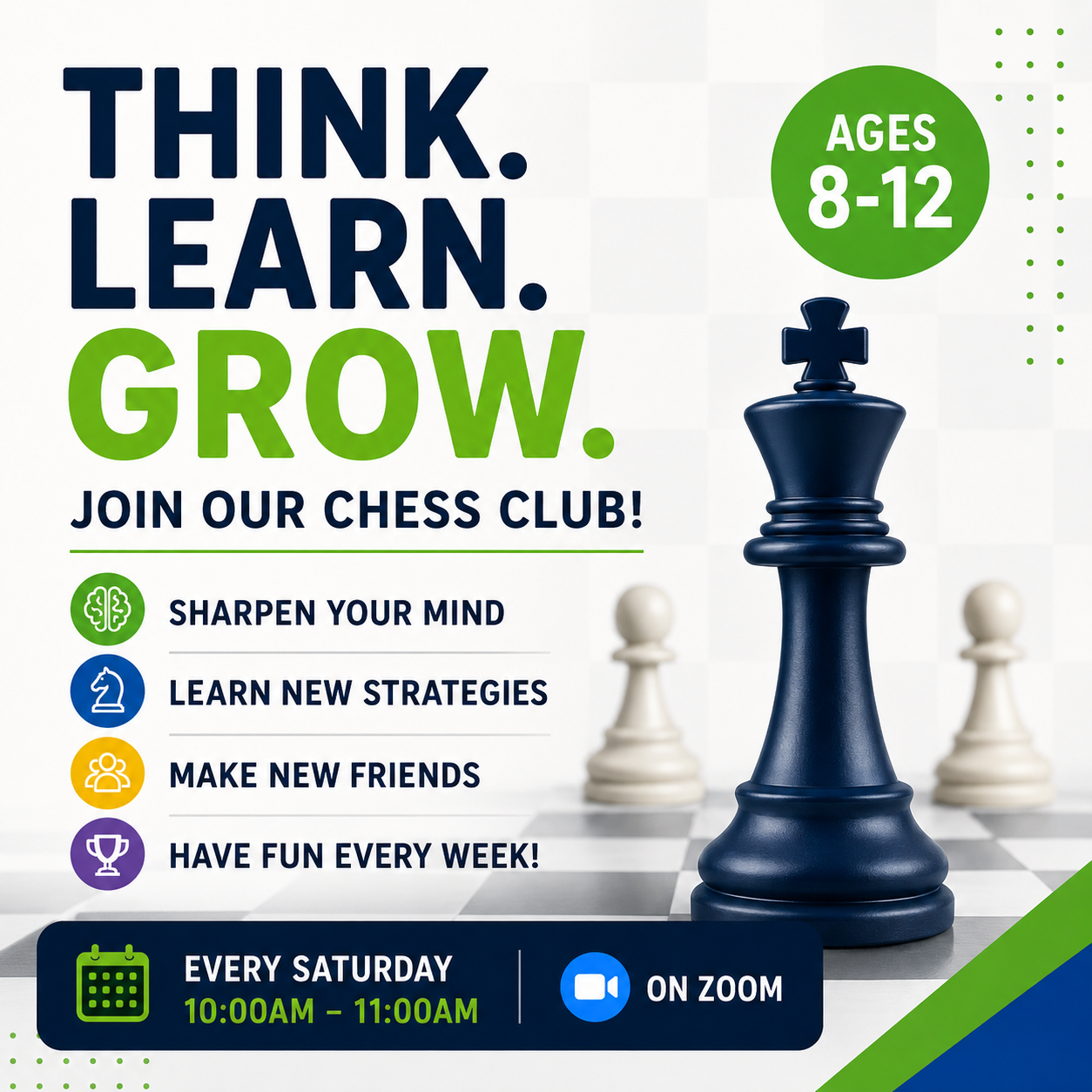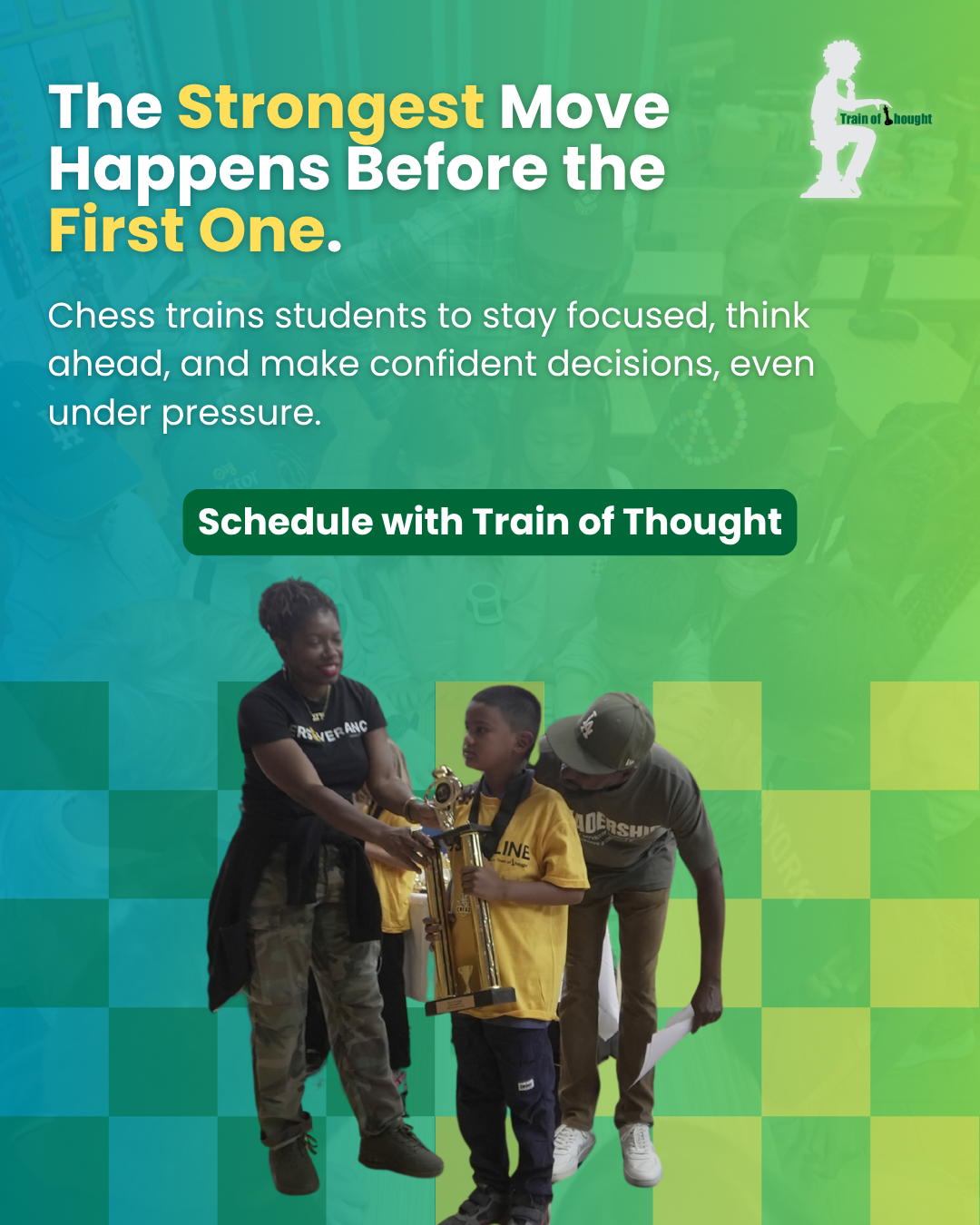
The start of the fall semester brings fresh challenges for students trying to stay focused and confident in the classroom. Chess education offers a unique way to sharpen student focus, build confidence, and nurture leadership skills during this critical time. Train of Thought’s proven k-12 chess program turns strategic play into real academic and social growth that schools, parents, and communities can count on this back-to-school season. Read more about this initiative here.
The Power of Chess Education
As students return to school, they’re faced with new challenges that demand focus, confidence, and leadership. Chess education can help build these skills in a way that’s both engaging and effective.
Building Student Focus
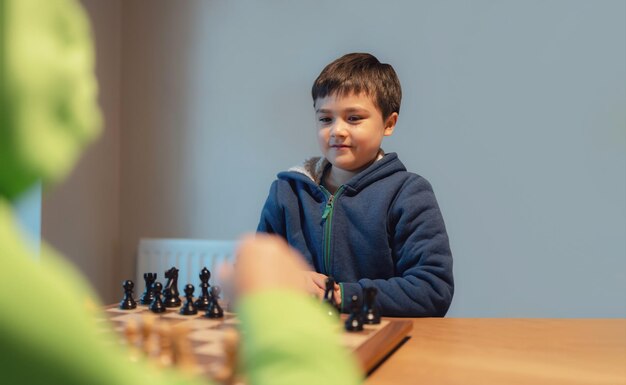
Chess sharpens a student’s ability to concentrate. When kids play chess, they must pay attention to the board, think about their opponent’s moves, and plan their next steps. This level of focus translates to the classroom, where students can concentrate better on their studies. The game requires them to stay engaged over long periods, which improves their attention span. Studies show that students who play chess regularly have enhanced focus and are better at ignoring distractions.
Beyond just focusing on the board, players develop the skill of filtering out unnecessary information, which is crucial in academic settings. This focus on detail helps students approach problems methodically. Moreover, the strategic nature of chess encourages them to think several steps ahead, a skill that benefits them across all subjects in school.
Enhancing Student Confidence
Chess boosts confidence by providing a sense of achievement. Successfully completing a game or mastering a new strategy gives students a confidence boost. Each win acts as a stepping stone, encouraging them to tackle new challenges with self-assurance. This renewed confidence spills over into their academic life, where they feel more capable of handling difficult tasks.
Chess also teaches resilience. Losing a game is not the end; it’s a chance to learn and improve. This mindset helps students recover from setbacks, both academically and socially. They learn that with practice and dedication, improvement is possible, reinforcing their belief in their abilities.
Developing Leadership Skills
Leadership is about making decisions and taking responsibility, which are core aspects of chess. Every move in chess teaches students about consequences and strategic thinking. Students who play chess learn to make decisions with confidence, a skill vital for effective leadership. Chess positions children as leaders of their own game, helping them understand the importance of planning and foresight.
As they engage in chess, students also learn the value of patience and empathy. Understanding an opponent’s perspective requires them to step into another’s shoes, fostering empathy. These qualities are essential for leaders who need to navigate complex interpersonal dynamics.
Benefits of Fall Semester Learning

Chess education aligns beautifully with the goals of fall semester learning by bringing unique benefits to the academic environment.
Strengthening Executive Function
Executive function skills include working memory, flexible thinking, and self-control. Chess enhances these skills by requiring players to remember previous moves, adapt to new strategies, and control impulses. This means students become better at organizing their thoughts and actions in school, leading to improved academic performance.
In a world where multitasking is often necessary, chess provides a structured way to improve cognitive abilities. It encourages students to manage multiple tasks simultaneously, such as evaluating potential moves while considering the opponent’s possible responses.
Fostering Critical Thinking Skills
Critical thinking is about evaluating information and making reasoned decisions. Chess is an excellent tool for honing these skills. Players must constantly analyze the board, predict outcomes, and make quick judgments. This practice helps students develop a logical approach to problem-solving in their studies.
By engaging with chess, students learn to question assumptions and explore different possibilities. This process of hypothesis and validation mirrors scientific inquiry, making it a valuable skill across various subjects.
Social Emotional Learning Through Chess
Chess supports social emotional learning (SEL) by encouraging students to engage with peers in a respectful and strategic manner. Through chess, students cultivate self-awareness and self-regulation by managing emotions during gameplay. They also learn social awareness and relationship skills as they interact with opponents and develop strategies.
The game promotes a sense of community and belonging, as students often play in groups, tournaments, or clubs. This interaction helps build communication skills and teaches children to handle both victory and defeat gracefully.
Bringing Chess to Your School

Implementing chess programs in schools can provide a host of benefits for students and educators alike.
K-12 Chess Program Opportunities
Train of Thought offers a variety of K-12 chess programs tailored to meet different needs. These programs can be integrated into the school curriculum or offered as extracurricular activities. They provide a structured way for schools to incorporate chess education and its benefits into their students’ lives.
Chess programs are versatile and can be adapted for different age groups and skill levels. This flexibility makes them accessible to all students, ensuring everyone can participate and benefit.
Classroom and After-School Chess Curriculum
The curriculum includes classroom instruction and after-school sessions, providing multiple touchpoints for students to engage with chess. Classroom chess helps educators incorporate strategic thinking into standard lessons, while after-school programs offer a relaxed environment for deeper exploration.
By offering both options, schools can ensure that chess education reaches a wider group of students. This dual approach supports various learning styles and paces, catering to individual student needs.
Engage with Train of Thought Nonprofit
Engaging with Train of Thought can open doors to valuable resources and support for schools interested in implementing chess programs. Their expertise and commitment to education through chess make them a trusted partner. They offer guidance, training, and materials to help schools successfully integrate chess into their curriculum.
Train of Thought provides strong community support and has a proven track record of improving student outcomes. Schools can benefit from their experience and insights, making it easier to start and sustain a successful chess program.
Frequently Asked Questions
How does chess help students academically?
Chess helps students by improving focus, critical thinking, and problem-solving skills. These skills can lead to better academic performance across various subjects.
What age group benefits most from chess education?
Chess education is beneficial for all ages, but K-12 students particularly benefit as they develop cognitive skills and character during these formative years.
Can chess be integrated into any school curriculum?
Yes, chess can be integrated into any school curriculum as part of regular lessons or as an extracurricular activity, making it a flexible educational tool.
What makes Train of Thought’s chess programs unique?
Train of Thought’s programs are unique due to their comprehensive approach, focusing on cognitive and character development, with a proven track record in diverse communities.
How can schools start a chess program?
Schools can start a chess program by partnering with organizations like Train of Thought, which provide resources, training, and support for successful implementation.