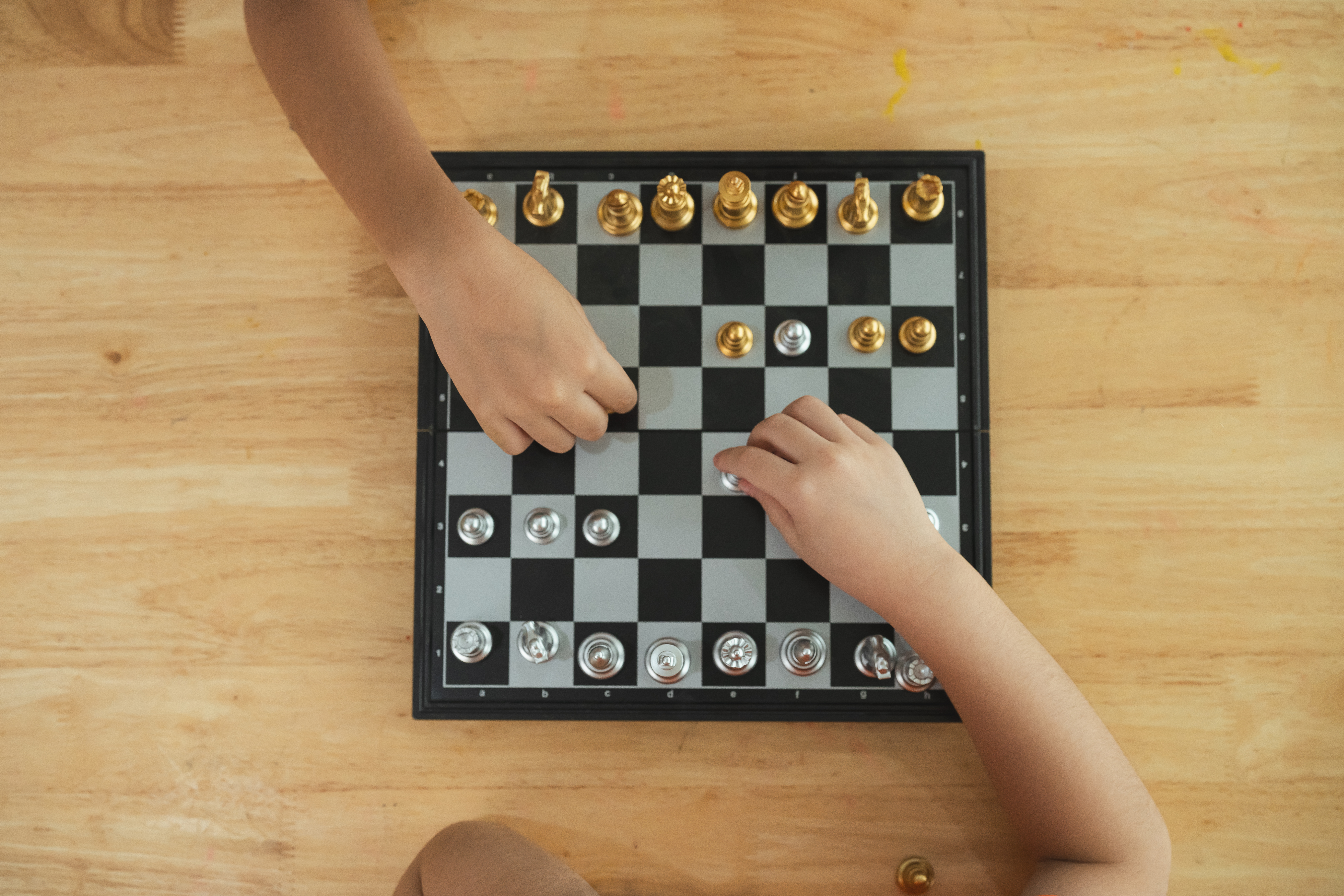
From Moves to Mindset: How Chess Builds Focus, Patience, and Better Decision-Making in Children
Most kids get distracted easily, making it tough for them to focus and think things through. Chess for kids changes that by training their minds to stay sharp and patient, helping them make smarter decisions both in school and in life. At Train of Thought, we’ve seen how this game builds skills that last far beyond the board. Ready to see your child grow in focus and leadership? Learn more about how chess supports cognitive development and patience here.
Chess for Kids: Building Focus

Chess is more than just a game; it’s a way to sharpen your child’s focus. With its strategic nature, chess teaches kids to concentrate on the task at hand and anticipate future moves.
Improve Focus in Children
Improving focus isn’t just about paying attention. It’s about learning how to block distractions. Chess trains kids to look at the whole board, anticipate opponents’ moves, and plan their strategy. When a child plays chess, they engage in a mental workout that strengthens concentration. This improved focus doesn’t stay on the board; it spills over into schoolwork and other activities, making everyday tasks easier to tackle.
One study found that children who play chess regularly can improve their reading scores by up to 12%. This isn’t just about reading more words per minute. It’s about understanding and retaining information better. Chess teaches children to think ahead and connect ideas, which enhances their ability to focus on complex subjects.
Cognitive Development Activities
Engaging in cognitive development activities like chess helps kids in more ways than one. Chess stimulates the brain, enhancing critical thinking and problem-solving skills. It requires players to identify patterns, think critically, and make decisions under pressure. These skills are crucial in academic settings where analytical thinking is often required.
By participating in chess, kids develop a mental framework that aids in understanding difficult concepts in math and science. Research from Building Brains shows that kids who play chess can process complex problems faster, thanks to the strategic planning and problem-solving practice they get from the game.
Patience Skills for Students

Patience is a virtue, and chess is a brilliant way to cultivate it in children. The game requires players to wait for the right moment to make a move, teaching them the value of patience in achieving their goals.
Social Emotional Learning Chess
Social emotional learning (SEL) through chess is an effective way to help kids manage emotions and build relationships. Chess is a social game that involves interaction and communication, helping children learn to control their emotions and understand the feelings of others.
When kids play chess, they learn to deal with victories and defeats gracefully. One key aspect of SEL is empathy, and chess provides the perfect environment for children to practice this. They learn to put themselves in their opponents’ shoes, thinking about their strategies and predicting their next moves. This understanding not only builds emotional intelligence but also strengthens social bonds. Check out more insights on how chess aids emotional learning.
Executive Function Skills
Chess also has a significant impact on executive function skills, which include working memory, flexible thinking, and self-control. These skills are essential for success both in and out of the classroom.
When a child plays chess, they must remember their opponent’s past moves, consider different strategies, and decide on the best action. This process enhances their working memory and decision-making skills. A study by Chess Brainz found that students who play chess show improvements in these areas, leading to better academic performance and behavior in school.
Decision-Making for Kids

Decision-making is a crucial life skill, and chess is a perfect way to practice it. Each move in chess is a decision that can change the outcome of the game, teaching kids to think critically and make informed choices.
Critical Thinking Through Chess
Critical thinking is at the heart of chess. Players must analyze the board, consider their options, and anticipate their opponent’s responses. This practice helps kids develop strong analytical and critical thinking skills.
In chess, every move counts. Children learn to evaluate different scenarios and choose the best course of action. This skill is invaluable in academic settings where problem-solving is key. According to the US Chess Academy, chess players often outperform their peers in logical reasoning tasks. This advantage translates to better grades and a more robust understanding of academic subjects.
Leadership Through Chess
Chess isn’t just about individual play; it teaches leadership too. By understanding the roles of each piece and how they work together, children learn about strategy and teamwork.
Playing chess encourages kids to think like leaders. They learn to plan ahead, manage resources, and adapt to changing situations. These skills enhance their ability to lead in group projects and extracurricular activities. Many parents and educators have observed significant improvements in leadership qualities among children who play chess regularly.
Chess is more than a game; it’s a powerful educational tool that shapes young minds, preparing them for future challenges. Whether it’s boosting focus or nurturing patience and decision-making, chess offers invaluable lessons that last a lifetime. Engage your child with chess today and watch them grow into strategic thinkers and confident leaders.







