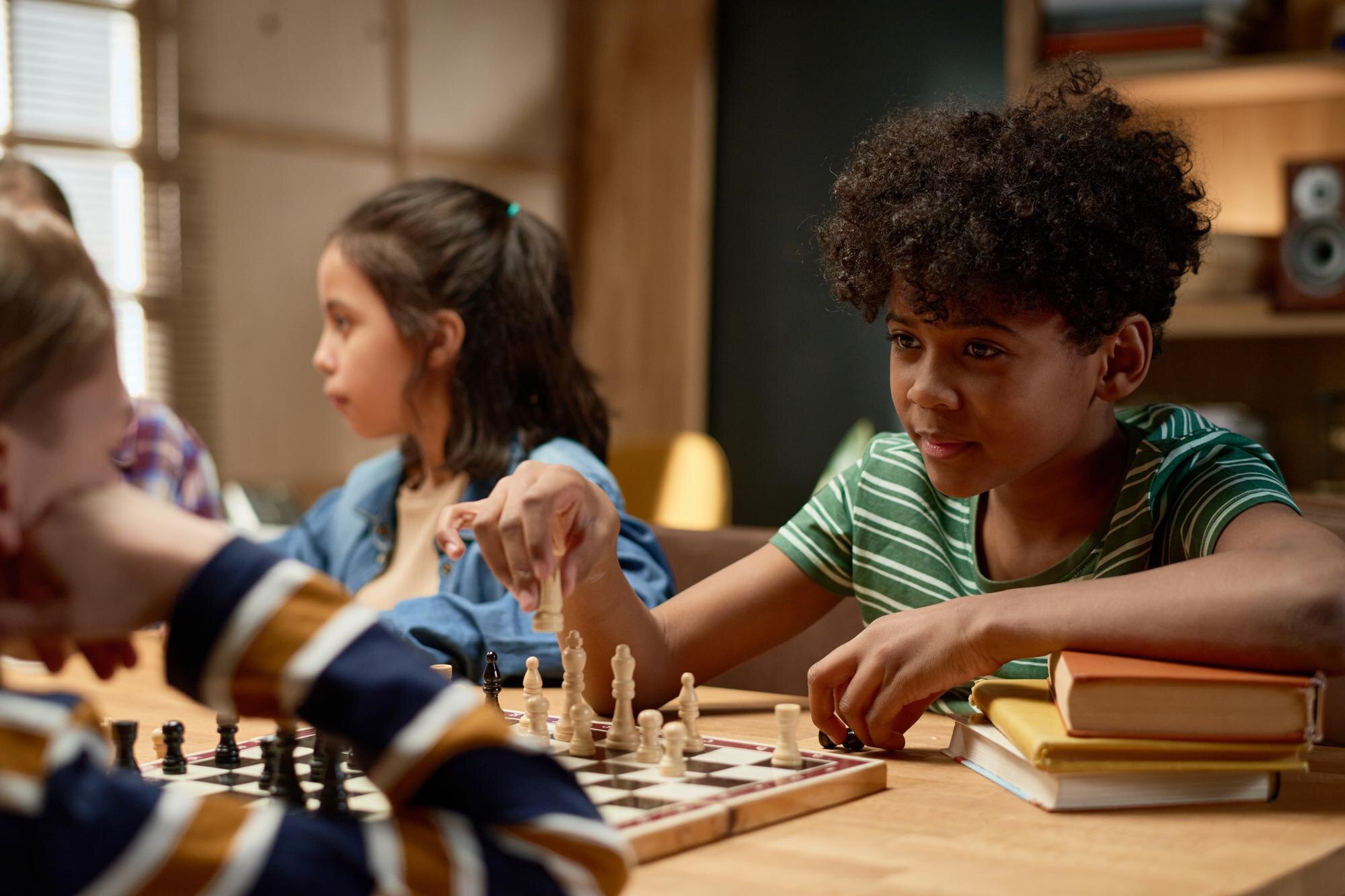
From Setbacks to Comebacks: How Chess Builds Resilience and Emotional Intelligence in K-12 Learners
Chess is often seen as just a game, but it’s much more than that for young learners. When kids engage with chess, they build resilience by learning how to bounce back from setbacks and develop emotional intelligence through thoughtful decision-making. At Train of Thought, our K-12 chess programs go beyond the board to nurture grit, self-regulation strategies, and leadership skills that last a lifetime. Ready to see how chess and resilience come together to shape confident, capable students? Learn more about the emotional lessons of chess here.
Building Resilience Through Chess

Chess offers more than just strategic play; it helps young students develop essential life skills. A central aspect of this is resilience, which empowers students to tackle challenges head-on.
Developing Grit and Perseverance
Chess teaches grit by requiring players to think several moves ahead. You learn to anticipate challenges and adapt strategies. For instance, when a strategy fails, players must adjust quickly. This mirrors life’s obstacles where perseverance becomes key. According to Chess.com, players often see improvements in patience and persistence.
Grit isn’t just about winning; it’s about learning from every game, win or lose. Each match is a chance to grow. Players analyze errors and refine techniques, fostering a growth mindset. The discipline of chess can spill over into academics, helping students manage school pressures. Explore tips for building resilience in children here.
Growth Mindset for Students
A growth mindset thrives in the chess world, where every move presents an opportunity to learn. Chess encourages kids to view challenges as opportunities. When students embrace this mindset, they become more open to trying new things, knowing that mistakes are stepping stones to success.
Chess helps students to see failure as part of learning. This mindset is critical in today’s fast-paced world. Students become resilient, ready to face new challenges. They learn that effort and persistence can change outcomes. Discover how Chess can foster critical thinking and personal growth.
Emotional Intelligence in Education

Building emotional intelligence in students is crucial for their success both in and out of school. Chess serves as an effective tool to enhance these skills, providing learners with the ability to manage emotions and understand others.
Self-Regulation Strategies
Chess naturally promotes self-regulation, teaching students to remain calm under pressure. In a game, players must think carefully before making moves, an exercise in patience and self-control. These moments of contemplation translate into better self-regulation in real life. Students learn to pause, reflect, and make considered decisions rather than reacting impulsively.
By practicing self-regulation on the chessboard, students develop a calm approach to stressful situations. For instance, when faced with a difficult problem at school, a student who plays chess might take a deep breath and assess options methodically. This mindset helps in exams and social interactions alike.
Social-Emotional Learning Through Chess
Chess fosters an understanding of emotions and empathy. Players learn to predict opponents’ moves, which involves understanding their thoughts and feelings. This skill enhances empathy, a key component of emotional intelligence.
Moreover, chess players often engage in respectful sportsmanship, shaking hands and acknowledging each other’s skills, which builds mutual respect. Through chess, students develop a sense of community, learning to value cooperation and friendly competition. These experiences enrich their social-emotional learning, preparing them for collaborative environments.
Community Impact and Partnerships

Chess doesn’t just benefit individual players; it has a significant impact on communities. By bringing chess into schools, we extend its benefits beyond the individual to the broader educational environment.
Bringing Chess Programs to Schools
Introducing chess programs in schools can transform learning environments. Schools that implement chess programs often notice improvements in students’ focus and academic performance. Chess clubs provide students with a safe space to develop socially and intellectually.
Train of Thought partners with schools to create comprehensive chess curricula. These programs are tailored to meet educational standards while fostering critical thinking and leadership skills in students. Read about successful partnerships and their impact on education.
Engaging Parents and Educators
Parents and educators play crucial roles in supporting students’ chess journeys. Engaging them in the process enriches the community, creating a network of support for young learners. Chess tournaments and workshops are excellent opportunities for community building, where families come together to celebrate students’ achievements.
Encouraging parents and educators to participate in chess activities fosters a culture of learning and collaboration. Schools that promote chess not only enhance students’ academic skills but also strengthen community ties. By involving everyone, we create a supportive atmosphere that nurtures students’ growth.
Chess is more than a game; it’s a powerful tool for building resilience and emotional intelligence. Through its strategic play, students learn invaluable life skills that prepare them for future challenges. As we continue to expand chess programs, we invite you to join us in this journey. Together, we can create a community where every student can thrive.







