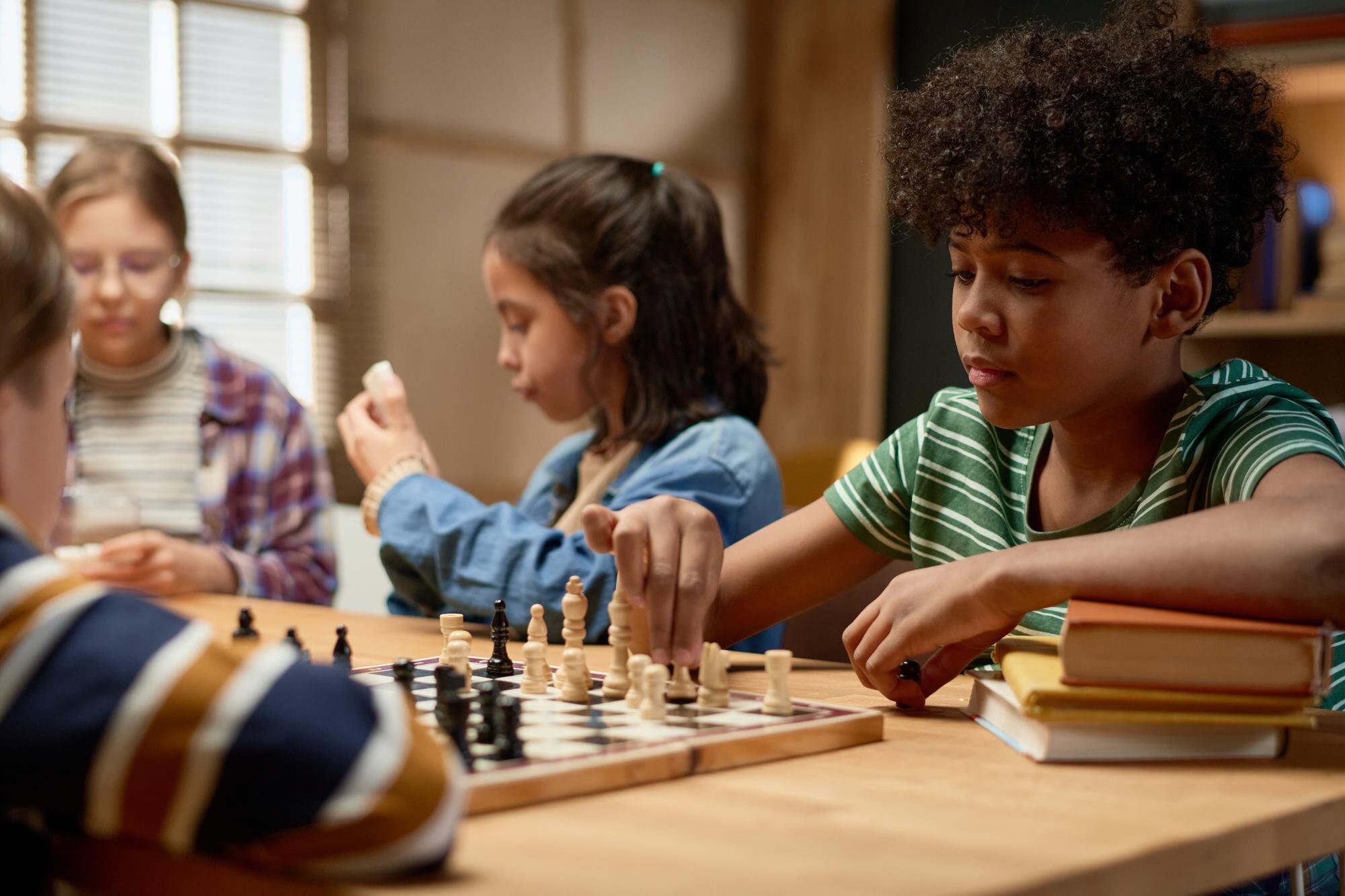
Beyond the Board: How Chess Grows Emotional Intelligence and Social Skills in Youth
Chess is often seen as a game of strategy, but its true power reaches far beyond the board. For young learners, chess emotional intelligence and social skills develop side by side, shaping empathy, self-regulation, and teamwork. When schools bring Train of Thought’s evidence-based chess curriculum into classrooms, students gain tools that build leadership through strategic play and critical thinking for students. Let’s explore how youth development through chess creates stronger, more connected communities. Learn more here.
Chess Emotional Intelligence in Action

Chess is more than a game; it’s a journey in personal growth and development. It builds a bridge between strategy and emotion, leading to emotional intelligence gains that can benefit you and your community.
Empathy Through Strategic Play
When you play chess, you learn to see the world from another’s perspective. This skill translates into understanding and empathy in real-life situations. Imagine a young player carefully considering their opponent’s next move. This mirrors real-life scenarios where understanding others’ thoughts can lead to successful interactions. Chess teaches empathy by requiring you to anticipate how others might feel or react, a skill that is vital not just on the board but in everyday life.
For instance, in a chess match, if you only focus on your plan without regard for your opponent’s strategy, you’re likely to make mistakes. Similarly, in life, empathy helps you understand and connect with others. Many parents and educators find that children who play chess become more thoughtful and considerate. This emotional connection through chess is supported by findings from research on emotional intelligence.
Building Self-regulation for Kids
Chess also teaches self-control and discipline. When kids learn to wait for their turn and plan their moves, they develop patience and self-regulation. These skills are crucial as they grow and face various challenges. Every move in chess requires focus and restraint, which translates into better self-control off the board.
Think about a child impatiently wanting to make a quick move. Chess teaches them to pause and think critically before acting. This practice helps them in school and social settings, where impulsivity can lead to misunderstandings or mistakes. Over time, students who play chess regularly show improved behavior and focus, a result that many educators aim for in character education.
Social Skills Through Chess

Chess is not just a solo journey; it’s a social experience that fosters communication and teamwork. By engaging in this strategic game, you open doors to building essential social skills.
Communication and Teamwork
Playing chess, especially in a club or group setting, encourages communication and teamwork. As players discuss strategies and analyze games together, they hone their communication skills. Chess clubs offer a unique environment where kids collaborate, share ideas, and learn from each other.
Picture a group of students working together to solve a challenging chess puzzle. They must communicate effectively to decide on the best moves, fostering teamwork. This collaborative environment helps students learn to articulate their thoughts clearly and work with others towards common goals. Even in competitive settings, the focus remains on mutual respect and sportsmanship, key elements of effective communication.
Leadership Development in Youth
Chess also provides a platform for nurturing leadership qualities. Young players learn to make strategic decisions, a skill that serves them well beyond the game. Every chess match is a mini leadership exercise, encouraging kids to lead themselves and others through challenges.
Consider a young leader organizing a chess tournament. They plan, coordinate, and motivate peers, skills that are invaluable in any leadership role. Chess empowers students to take initiative, learn from mistakes, and inspire others, preparing them for future leadership opportunities in various aspects of life. By fostering leadership through strategic play, students gain confidence and a sense of responsibility.
Bringing Chess to Your Community

Your community can greatly benefit from incorporating chess programs. The advantages extend beyond individual growth, impacting the community as a whole.
Evidence-based Chess Curriculum
Train of Thought offers a structured chess curriculum that combines fun with learning. This curriculum is grounded in research, ensuring that students gain maximum cognitive and emotional benefits. By integrating chess into the school day, educators provide students a unique avenue for growth.
Chess programs in schools have been shown to improve cognitive development significantly. According to studies like those found in cognitive development studies, chess enhances critical thinking skills and problem-solving abilities. Introducing an evidence-based chess curriculum in your school can lead to remarkable improvements in students’ academic and social lives.
School Partnerships and Community Programs
Bringing chess to local schools and communities creates lasting partnerships. Schools that partner with organizations like Train of Thought often see positive changes in student engagement and achievement.
These partnerships extend beyond the classroom. Community chess programs offer opportunities for family involvement and local events, strengthening community ties. By participating in chess programs, families and community members contribute to creating a supportive environment for youth development. Programs like these are essential, especially in underserved areas, as they provide valuable resources for growth and learning.
Chess is a powerful tool for building emotional intelligence and social skills. By incorporating it into classrooms and community programs, you help shape well-rounded, empathetic, and intelligent future leaders. The longer you wait to introduce these benefits to your community, the more opportunities for growth are missed. Now is the time to make a difference with chess.







